


How to Choose The Right Curly Clip-In Hair Based on Texture, Quality and Styling Needs

Choosing the right natural hair extensions is about much more than finding a curl pattern that looks similar in a photo. Natural tresses can vary significantly in curl diameter, density, shrinkage, porosity, fullness, and styling behavior, even among people who identify with the same curl type. A convincing match comes from looking at how an extension behaves alongside your own mane, not simply whether both are labeled 3C, 4A, or 4C. Curly clip-ins can be particularly useful because they allow you to add volume or length without committing to a permanent installation. However, the most natural-looking result usually comes from considering texture, quality, density, shrinkage, desired volume, and the amount of natural hair that will remain visible. Understanding these factors makes it easier to choose extensions that complement your existing texture rather than requiring excessive manipulation to make the two blend.
Finding Curly Clip-Ins That Actually Complement Natural Hair
When choosing the Best Curly Clip-In Hair Extensions for Natural Hair, start by comparing the extension texture with the portion of your natural hair that will actually be visible. This matters because curl typing alone cannot tell you exactly how two textures will interact. One person's 3C curls may be fine and springy, while another person's may be much denser and fuller. A useful best curly clip-ins for natural hair comparison should therefore consider several characteristics at once. Curl diameter tells you how large or small the curls appear, while density determines how full the extensions look. Shrinkage affects the apparent length, and overall texture behavior influences how easily your mane and the extensions can be styled together.
For 3A and 3B textures, clip-ins with larger, more visible curls may create a smoother transition because the natural curl formation remains noticeable throughout the finished style. Moving toward 3C and 4A, tighter curls and smaller coils generally become more important. For 4B and 4C textures, density, compactness, shrinkage, and the overall visual structure of the coils can matter just as much as individual curl definition. This is why choosing solely from a curl-type label can lead to disappointing results. Instead of asking only, “Is this extension 4A?” ask whether its curl size, fullness, shrinkage, and overall appearance resemble the part of your natural tresses you intend to leave out.
Using Independent Beauty Editorials When Researching Clip-Ins
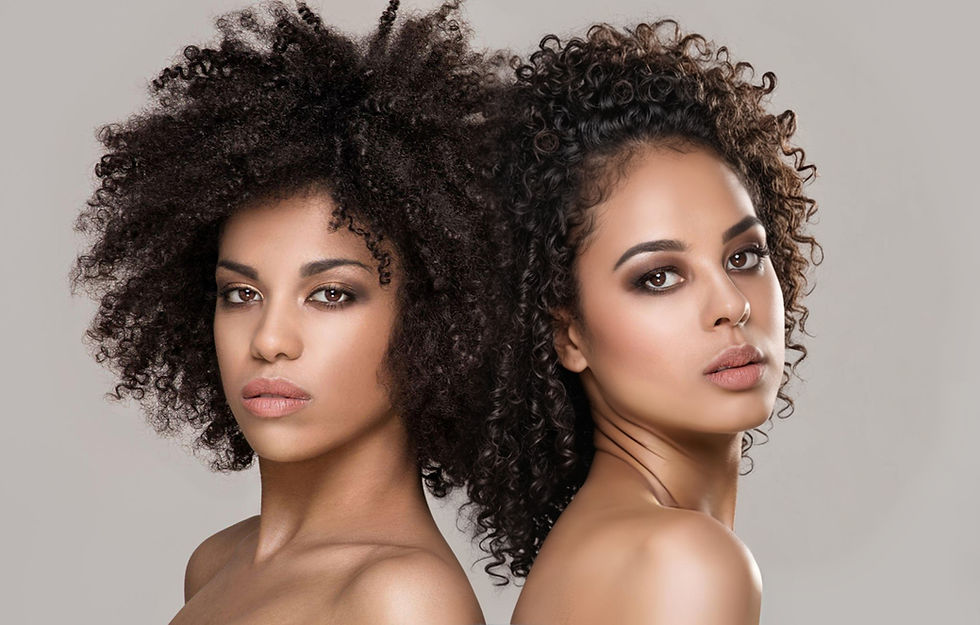
Outside opinions can add another layer of research when comparing Natural Clip-In Hair Extensions Featured by InStyle with other textured extension options. Independent beauty publications often test, review, or curate products using criteria that may differ from the information presented on a brand's own website. That additional perspective can help readers identify details worth investigating further. Researching natural hair clip-ins featured by instyle can be particularly useful when you want to see how a textured product has been discussed outside its manufacturer's own marketing.
Editorial recognition should not automatically determine what you buy, but it can introduce products, textures, construction details, or performance considerations that deserve a closer look. The most balanced approach is to combine editorial research with your own texture requirements. A product that performs well for one reviewer may behave differently on another person's mane because density, curl pattern, installation technique, climate, styling habits, and maintenance routines can all affect the final result.
Matching Clip-Ins to 3A Through 4C Curl Patterns
Curl typing provides a useful starting point, but it works best as one part of a broader texture-matching process. People with 3A hair generally have larger, looser curls, while 3B patterns tend to have smaller and springier curls. Type 3C commonly features tighter corkscrews with greater visual density. As you move through 4A, 4B, and 4C, coils generally become tighter, and shrinkage and density often become increasingly important considerations.
If your natural tresses fall between categories, do not feel pressured to choose extensions based on a single label. Mixed curl patterns are extremely common. Someone might have looser curls around the perimeter and tighter coils through the crown, for example. In this situation, prioritize the area that will remain visible after the clip-ins are installed. When reviewing best curly clip-ins for natural hair, compare actual texture characteristics rather than relying entirely on the number printed beside the product. Look closely at curl diameter, how tightly the strands cluster together, how much volume the set creates, and whether the texture appears compatible with your natural finish.
Why Density Can Matter as Much as Curl Pattern
Two textures can have almost identical curls and still fail to blend because their densities are noticeably different. If your natural mane is very full but the extensions are sparse, the added length may look disconnected. Conversely, extremely dense clip-ins placed into naturally fine tresses can create an abrupt transition between your own hair and the added volume. Think about the silhouette you want to create. Someone seeking subtle fullness may need less extension density than someone building a voluminous curly style. More hair is not automatically better. The objective is proportion.
Placement also affects perceived density. Distributing clip-in wefts strategically can create fullness where it is needed without concentrating too much volume in one area. This is especially helpful when your natural density varies between the crown, sides, and back.
Understanding Shrinkage Before Choosing a Length
Shrinkage is one of the easiest factors to overlook when shopping online. Curly and coily extensions may appear substantially shorter in their natural state than when stretched. Two sets advertised at the same length can therefore look very different once installed if their curl patterns have different levels of shrinkage. Rather than evaluating length alone, consider how the extension falls when curly. A tighter texture may need a longer stretched measurement to produce the same visible length as a looser curl.
Shrinkage also influences blending. If your natural tresses shrink significantly while your extensions remain comparatively elongated, the difference may become noticeable around the leave-out. Texture compatibility should therefore include how both your mane and the extensions respond after washing, drying, and styling.
What Hair Quality Means for Curly Clip-Ins
Quality is especially important with curly extensions because the strands may regularly be exposed to washing, detangling, styling products, and manipulation. Human hair extensions generally provide greater styling flexibility than synthetic alternatives, but the term “human hair” by itself does not tell you everything about construction or long-term performance. Look for transparent information about the type of hair used, whether the cuticles are aligned, recommended maintenance, expected styling behavior, and any processing the hair has undergone.
Product photographs should also show enough detail for you to evaluate the curl pattern rather than relying entirely on highly styled finished images. When using resources such as natural hair clip-ins featured by instyle, pay attention to what the editorial actually evaluated. Recognition is useful context, but your decision should still reflect your own texture, styling expectations, budget, and maintenance preferences.
What Creates a Seamless Blend With Natural Tresses
A seamless blend usually comes from similarity rather than perfection. Your natural hair and extensions do not need to form identical curls strand for strand. They should, however, share enough visual characteristics that the transition is difficult to identify once styled. Start with curl scale and density. Next, examine how much definition each texture has. Some natural manes have highly visible corkscrews, while others have a fluffier pattern with less uniform definition.
Choosing extremely polished curls for naturally less-defined tresses can make the contrast more noticeable. The amount of leave-out matters too. If very little natural hair will be exposed, you may have more flexibility with the extension texture. If a substantial portion of your own hair will remain visible, closer texture matching becomes more important.
Common Texture-Matching Mistakes to Avoid
One common mistake is choosing extensions based solely on a model photograph. Lighting, styling products, brushing, humidity, and professional finishing can all change how curls appear. Product imagery is useful, but it should be considered alongside written texture information and realistic examples. Another mistake is focusing entirely on curl type while ignoring density. A technically similar curl can still look unnatural if the volume differs dramatically from your own mane.
Shoppers may also choose a texture they hope to force their natural hair to resemble. Repeatedly manipulating, stretching, or heat-styling your leave-out just to match the extensions can make the installation unnecessarily demanding. A closer starting texture can reduce the amount of daily styling needed. Finally, avoid assuming that the most expensive or most frequently recommended option must be right for you. Even when exploring best curly clip-ins for natural hair, individual compatibility should remain the deciding factor.
Choosing the Right Amount of Volume for Your Style
Your styling goal should influence how much extension hair you need. Someone looking to fill out the ends of an existing curly style may require considerably less volume than someone creating a dramatic, full-bodied look. Consider your natural density before adding extra fullness. Fine or lower-density tresses can sometimes be overwhelmed by very heavy sets, while thick natural hair may require additional wefts to maintain visual balance from roots to ends.
Also consider comfort. Clip-ins distribute added hair across multiple attachment points, but unnecessary weight can still make a style less comfortable. The best result is not necessarily the fullest possible result; it is the amount of volume that looks proportionate and feels manageable.
How Styling Habits Should Influence Your Choice
Your everyday routine matters just as much as your curl pattern. If you frequently wash and restyle your extensions, prioritize hair that can tolerate the maintenance routine recommended for that particular product. If you mainly wear clip-ins for occasional volume, your priorities may be easy installation, reliable texture matching, and convenient storage between wears.
Think about whether you normally define your curls, stretch your mane, wear fluffy wash-and-go styles, or prefer polished curl definition. An extension that looks convincing beside defined curls may not create the same effect beside brushed-out or stretched natural tresses.
This is where comparing best curly clip-ins for natural hair by styling behavior becomes more useful than treating one texture as universally superior. The strongest match is the one that works with the way you actually wear your hair.
Evaluating Product Information Before You Buy
Before purchasing, review the product description carefully. Look for information about curl pattern, density, number of pieces or wefts, length, hair type, recommended care, and whether the texture can be washed and restyled. Clear product information makes meaningful comparisons easier. Then examine photographs or videos showing the extensions from different angles. If possible, look for examples on people with natural textures similar to yours. Customer images can provide additional context, although individual results will naturally vary.
Editorial resources such as natural hair clip-ins featured by instyle can complement this research by offering another point of reference. The goal is not to find one source that makes the decision for you. It is to compare information from several credible sources and determine whether the product's characteristics align with your own needs.
Making a Texture First Decision That Works for You
Choosing curly clip-in extensions becomes much easier when you stop searching for a universally “best” texture and start looking for compatibility. Begin with the natural tresses that will remain visible, then compare curl diameter, density, shrinkage, definition, hair quality, and desired volume. Use curl categories such as 3A through 4C as helpful reference points rather than rigid rules. If your mane contains several patterns, match primarily to the area that needs to blend with the extensions. From there, consider your installation preferences, maintenance routine, styling habits, and the amount of fullness you actually want.
Resources discussing best curly clip-ins for natural hair can help narrow down texture-specific options, while independent references such as natural hair clip-ins featured by instyle can provide useful outside context during the research process. Neither should replace evaluating what works for your individual hair. The most natural-looking extensions are ultimately those that complement what is already there. When texture, density, shrinkage, quality, and styling needs are considered together, curly clip-ins can become a flexible way to experiment with length and volume while allowing your natural texture to remain central to the finished look.


Comments